Interior Iceland: Highlands, Active Volcanoes and Secret Hot Springs in 12 Days
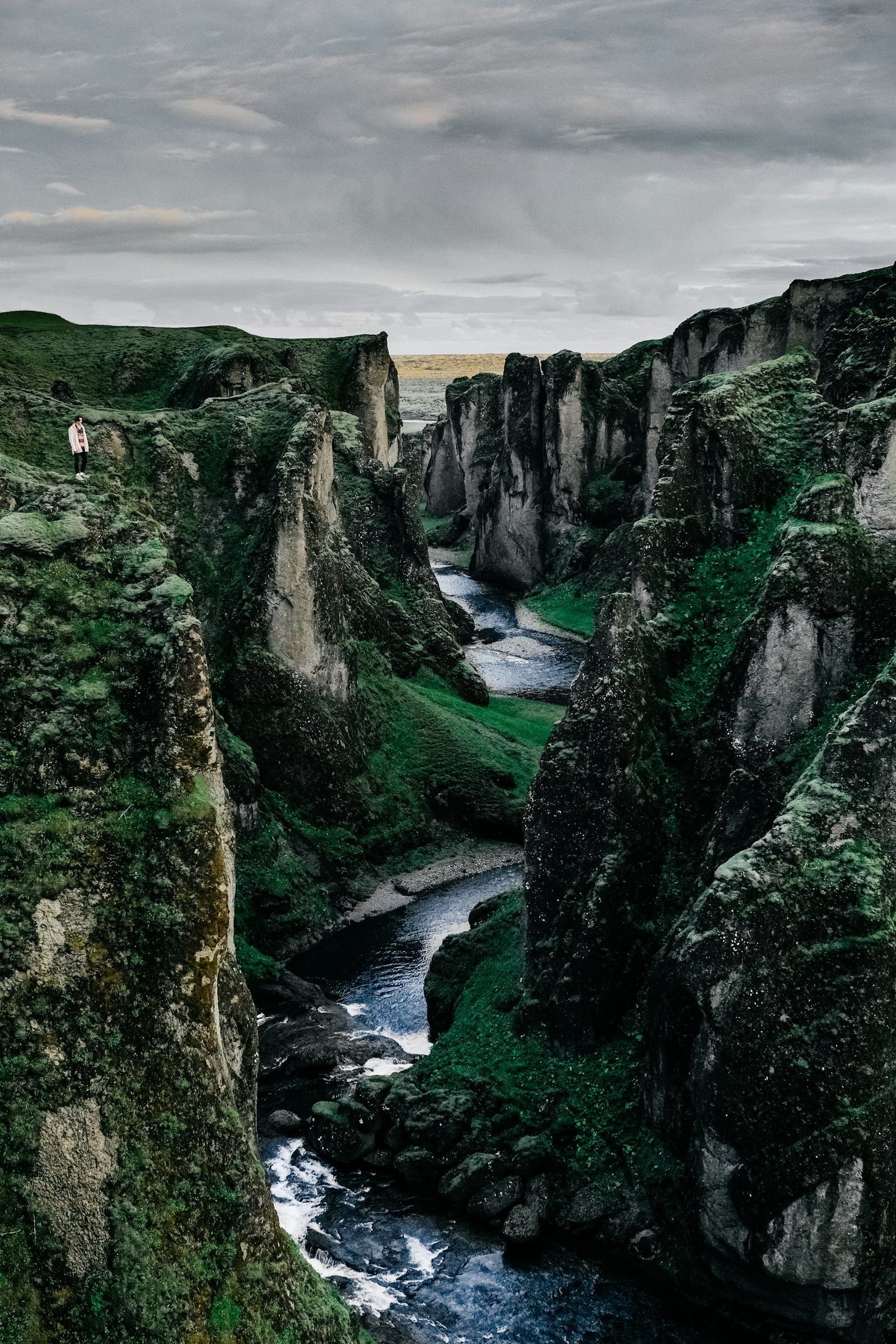
If you've already driven the Ring Road, interior Iceland is another planet. Highlands inaccessible most of the year, active volcanoes, lava deserts, glacial rivers you must ford with your car and natural hot springs with not a soul around. 🌋 Here's how we discovered the Iceland almost nobody sees.
Landmannalaugar: Rhyolite mountains
Landmannalaugar is the gateway to the Highlands and one of the most surreal landscapes on Earth. Rhyolite mountains painted in impossible colors—orange, green, violet, yellow, black—that shift with the sunlight. No Photoshop: it really looks like this.
Getting there requires crossing rivers by car (high-clearance 4x4 mandatory). The Kaldaklofskvísl river is the most intimidating: knee-deep glacial water, strong current and slippery stone bottom. If in doubt, wait for another car to pass and follow their line.
The Laugavegur trek (55 km, 4 days) connects Landmannalaugar to Þórsmörk and is considered one of the world's best. It crosses obsidian fields, volcanic deserts, glaciers and green valleys. Mountain huts book out months in advance and cost ~€75/night.
Landmannalaugar's natural thermal pool is the reward after trekking: a hot river bubbling up between lava rocks, surrounded by colorful mountains. Free, open 24h and with no infrastructure beyond a basic changing room.
Askja and the Ódáðahraun desert
Askja is a caldera volcano in Iceland's heart, accessible only July-September via the F910 track. The road itself is an adventure: 100 km of lunar black desert (Ódáðahraun, Europe's largest lava desert) where absolutely nothing grows. NASA trained Apollo astronauts here before going to the Moon.
Askja's caldera contains Lake Öskjuvatn (Iceland's deepest at 220 m) and Víti crater, a milky turquoise geothermal lagoon at 25°C where you can swim. The descent into the crater is steep and slippery, but swimming in an active volcano is an otherworldly experience.
The route from Mývatn via F88 crosses the Lindaá river (deep ford, experienced drivers only) and passes Herðubreið, the "queen of Icelandic mountains," a perfectly shaped volcanic tuya rising 1,682 m above the desert.
The solitude of the Highlands is absolute: you can drive for hours without seeing another car or sign of civilization. It's Europe's last frontier, a territory that belongs more to geology than humanity.
Þórsmörk and Eyjafjallajökull volcano
Þórsmörk (Thor's Valley) is a green oasis hidden between three glaciers. Accessible only by 4x4 crossing glacial rivers or on special high-clearance buses. The Krossá river is the most famous and feared crossing: it constantly changes course and can be over half a meter deep.
The valley is spectacular: green moss-covered canyons, hidden waterfalls, views of Mýrdalsjökull and Eyjafjallajökull glaciers (yes, the volcano that paralyzed Europe in 2010). The Valahnúkur viewpoint trek offers a 360° panorama of glaciers, braided rivers and mountains that alone justifies the trip.
The Fimmvörðuháls trail (25 km, 1 day) connects Þórsmörk to Skógar passing between glaciers and through the 2010 eruption craters (Magni and Móði, named after Thor's sons). The lava is still warm in places and the contrast between glacial ice and black volcanic rock is hypnotic.
Camping in Þórsmörk (Básar or Húsadalur) is sleeping at the end of the world: the sound of glacial rivers, wind through birch trees and, if lucky in September, northern lights over the glaciers.
Kerlingarfjöll and the Kjölur route
The Kjölur route (F35) is Iceland's most accessible interior track (some sections suitable for robust 2WD, though we recommend 4x4). It connects the north (Blönduós) to the south (Gullfoss) crossing the Highlands through their center.
Kerlingarfjöll is the star stop: a mountain massif with intense geothermal activity where steam rises between snow, ice and orange rhyolite. The Hveradalir (Hot Springs Valley) trek is like walking on another planet: fumaroles, boiling springs, bubbling mud and perpetual snow, all in the same visual field.
Kerlingarfjöll cabins (from ~€100/night) are Iceland's most isolated accommodation: no cell signal, no WiFi, no artificial light. Just you, the mountains and the deepest silence you'll ever experience.
Hveravellir, halfway along the Kjölur, is a geothermal oasis with a natural hot pool (38-40°C) in the middle of nowhere. Travelers have been stopping here for centuries: the outlaw Fjalla-Eyvindur sheltered in the steam caves in the 18th century, surviving Iceland's Highland winter.
Practical tips and budget
Iceland's Highlands are only open mid-June to mid-September (exact dates depend on snow). F-roads require mandatory 4x4 and river insurance (gravel and sand/ash protection also recommended). Renting a prepared 4x4 costs €150-300/day.
There are no gas stations, shops or accommodation in most of the Highlands. You must carry extra fuel (20L canister), food for several days, drinking water, physical map (GPS fails), first aid kit and a satellite phone or PLB (personal locator beacon).
River fords are the greatest danger. Basic rules: never cross alone, walk first to gauge depth and current, cross diagonally facing upstream, maintain constant speed and NEVER stop in the middle. If water exceeds axle height, turn back.
Budget for 12 days interior (2 people): Prepared 4x4 rental: €2,000-3,600. Fuel: €400-600. Huts and campsites: €600-1,000. Food (mostly self-catering): €400-600. International flight: €200-400/person. Additional vehicle insurance: €200-400. Total: €3,800-6,600 for two people. Interior Iceland isn't cheap, but it's one of Europe's last wild adventures.
Plan this trip
Itineraries, budgets and real traveler routes for this destination.
More stories from Iceland
Ready to live your own adventure? Create your free Odysseus account and plan your next trip.
Create a free account on the web