Munich: 5 Days Among Beer Halls, Fairytale Castles and the Alps
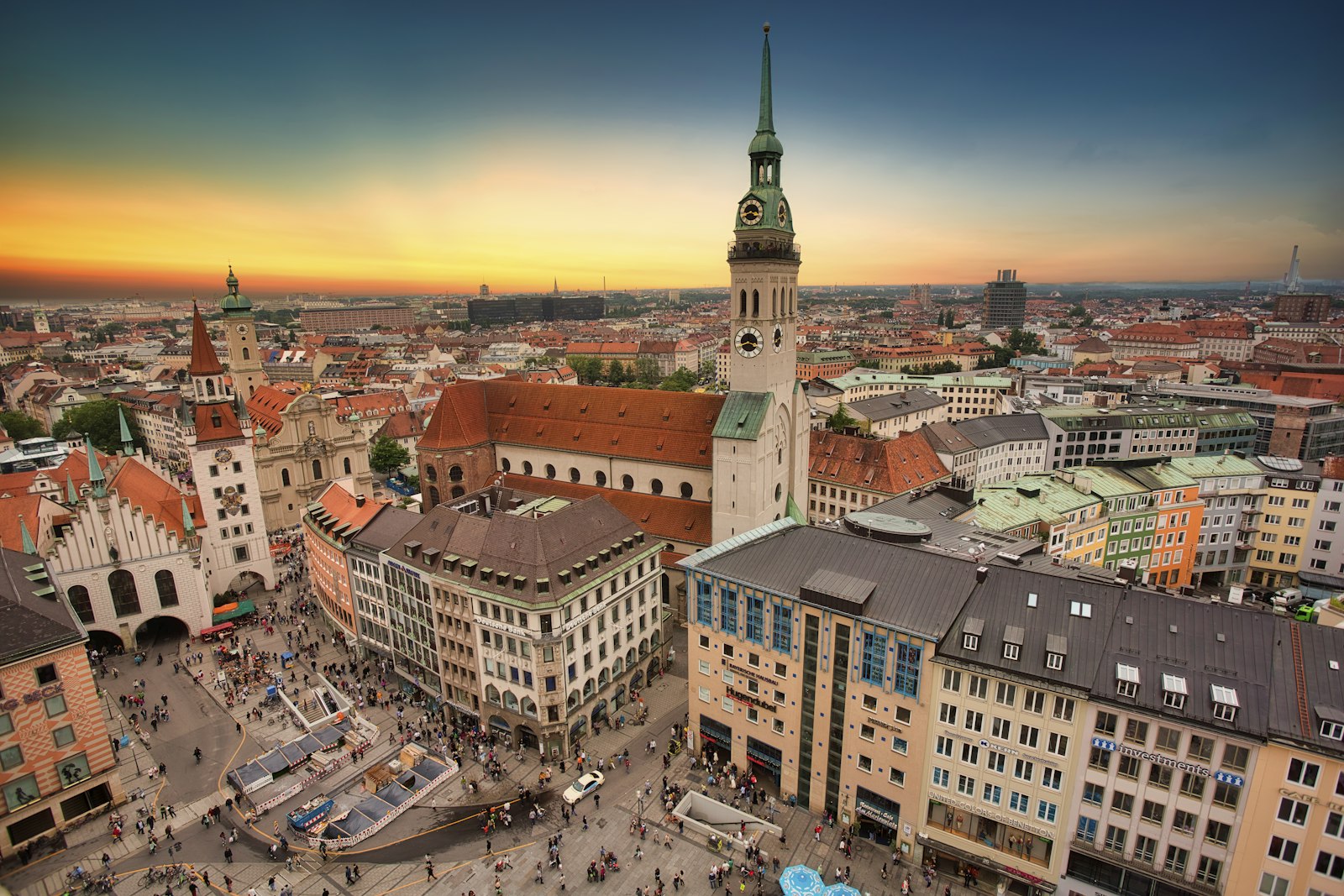
Munich is Germany's most welcoming face: beer gardens under chestnut trees, royal palaces with rococo ceilings, world-class museums and the Bavarian Alps an hour away by train. 🍺 Five days to enjoy Bavaria's capital with the obligatory excursion to Neuschwanstein Castle.
Marienplatz and the historic heart
Marienplatz has been the city's nerve center since 1158. The Neues Rathaus (New Town Hall, neo-Gothic) houses the Glockenspiel, a carillon with 32 life-sized figures dancing at 11AM and noon (also 5PM in summer). Climbing the tower (€6.50, elevator) offers the best central view.
Frauenkirche (Cathedral of Our Lady, free, €7.50 to climb the south tower) is Munich's symbol with its two 99-meter onion-domed towers. The Devil's Footprint at the entrance is mandatory legend.
Viktualienmarkt (free), a fresh produce market since 1807, is perfect for an outdoor lunch: weisswurst with pretzel, Bavarian cheese, fruit and a fresh beer in the central biergarten. Stalls close at 6PM.
Steps away, Asamkirche (free), a small 18th-century rococo chapel, is a hidden gem. The Residenz (€10), former Wittelsbach palace, has 130 visitable rooms and the Hall of Ancestors with 121 portraits. The Treasury (€4 extra) guards royal jewels.
Beer halls, gardens and beer hall culture
Munich is the world's beer capital. Hofbräuhaus (1589) is the world's most famous beer hall: live Bavarian music, communal tables, dirndl-clad waitresses bringing one-liter steins (Maß, €9.50). Touristy but essential. Best after 7PM.
More local alternatives: Augustiner Bräustuben (Munich's oldest beer, 1328), Paulaner am Nockherberg (huge terrace with views) and Schneider Bräuhaus (specialized in weissbier, wheat beer).
Beer gardens (biergarten) are a Bavarian institution: Chinesischer Turm in the Englischer Garten (the largest, 7,000 seats under chestnuts) and Hirschgarten (the world's largest, 8,000 seats with grazing deer) are mandatory. Bringing your own food is allowed if you order beer.
The Englischer Garten (free) is bigger than Central Park: surfers on the permanent Eisbach wave, nudists in designated areas (Germany), Chinese pagoda and kilometers of trails. Renting a bike (€15/day) is the best way to explore.
Oktoberfest (late Sept-1st week of Oct) is the world's largest beer festival. Without a tent reservation it's hard to find seats: go on weekdays at midday.
Museums: from Da Vinci to BMW
Munich has Germany's largest museum concentration. Pinakothek der Moderne (€10), Alte Pinakothek (€7, €1 on Sundays) and Neue Pinakothek (closed for renovation until 2029) are the Kunstareal: from Renaissance to contemporary art. All three in one relaxed day.
The Deutsches Museum (€15) is the world's largest science and technology museum: 28,000 objects from engineering, aviation, energy, electronics. Plan 4-5 hours minimum. Ideal for families.
The BMW Museum (€10) and BMW Welt (free) at the Olympic complex are mandatory for motor enthusiasts: the Munich-based manufacturer's history since 1916 and new car deliveries. The BMW Factory (tour €12, book 4 weeks ahead, no infants) shows real production.
Lenbachhaus (€12) holds the largest Blaue Reiter collection (Kandinsky, Marc, Münter). Small but brilliant.
Dachau Memorial (free, 30 min by S-Bahn) is the first Nazi concentration camp (1933). A hard but essential visit. Two hours minimum. Not suitable for young children.
Fairytale castles: Neuschwanstein and Linderhof
Neuschwanstein Castle (€15, book online weeks in advance) is Disney's inspiration and Germany's most visited monument (1.5M visitors/year). 2 hours by train to Füssen (€37 Bayern Ticket, valid for 5 people all day) + 30 min bus to Hohenschwangau + 30 min uphill walk or bus (€3).
Internal visit is strict (35 min with guide, no photos). Recommended: walk up to Mary's Bridge (Marienbrücke, 15 min from the castle) for the iconic photo of the castle between mountains and Lake Alpsee.
Hohenschwangau Castle (steps away, €18) is where King Ludwig II grew up and offers a more intimate visit. Combining both castles with a fixed-price guided tour can save time.
Linderhof (€10) is the smallest and only castle Ludwig II completed. Gardens with waterfall, illuminated Venus Grotto and the famous Moroccan pavilion. 1 hour by bus from Neuschwanstein, best combined in a full-day tour.
Alternative: Garmisch-Partenkirchen (1h20 by train) is the base to climb the Zugspitze (2,962m, Germany's highest mountain, cable car €65) or hike the Partnach Gorge.
Practical tips and budget
Getting around: the MVV system (U-Bahn metro + S-Bahn light rail + trams + buses) is flawless. Daily ticket €9.20, weekly €21. Airport via S-Bahn €13 (40 min). The center is flat and walkable.
Accommodation: Altstadt (historic center) is ideal but expensive (€150-300/night mid-range hotel). Schwabing is the bohemian university neighborhood (more affordable). Maxvorstadt (near the museums) is excellent. Hostels from €30/night. During Oktoberfest prices triple: book a year ahead.
Budget for 5 days (per person): Flight: €80-200 (from Spain). Accommodation: €600-1,200. Transport: €30 (weekly pass). Food: €250-500 (beer hall with plate + Maß: €25, mid-range restaurant: €25-40). Bayern Ticket Neuschwanstein: €37 (shared among 5: €7.40/person). Museums: €60-100. Total: ~€1,000-1,900 (excluding flight).
Best time: May-September (long days, beer gardens open, 18-25°C). Oktoberfest (late Sept-October) and Christmas markets (December) are unique but expensive experiences. January-February allows combining with skiing in the Alps an hour away.
Plan this trip
Itineraries, budgets and real traveler routes for this destination.
More stories from Germany
Ready to live your own adventure? Create your free Odysseus account and plan your next trip.
Create a free account on the web