Madagascar: Lemurs, Baobabs and the Island Time Forgot in 14 Days
Madagascar is the world's fourth-largest island and an evolution laboratory: 90% of its fauna and 80% of its flora exist nowhere else on Earth. Free-roaming lemurs, avenues of ancient baobabs, impenetrable rainforests and beaches rivaling the Maldives. 🦎 Here's how we discovered the continent island.
Antananarivo and the central highlands
"Tana" (as the Malagasy call it) is a chaotic city built on 12 sacred hills. Red brick houses pile on top of each other along slopes, connected by steep alleyways and staircases reminiscent of a tropical Lisbon.
The Queen's Palace (Rova of Manjakamiadana) crowns the highest hill with views across the entire city. Though a 1995 fire destroyed it, the ongoing restoration and views merit the climb. Analakely market buzzes with exotic fruits, zebu (Madagascar's sacred cow) and wild silk crafts.
First lemur contact can be made at Lemur Park (25 km from Tana): a sanctuary with several species including the indri, the largest lemur (it doesn't exist in captivity outside Madagascar). Its territorial call, a howl resonating through the entire forest, is one of nature's most memorable sounds.
Malagasy cuisine fuses African, Asian and French influences: romazava (meat stew with greens), ravitoto (pork with crushed cassava leaves), mofo gasy (fried rice pancakes) and the ubiquitous riz avec (rice with accompaniment). Madagascar vanilla is the world's finest (80% of global production) and perfumes local desserts.
Avenue of the Baobabs and Morondava
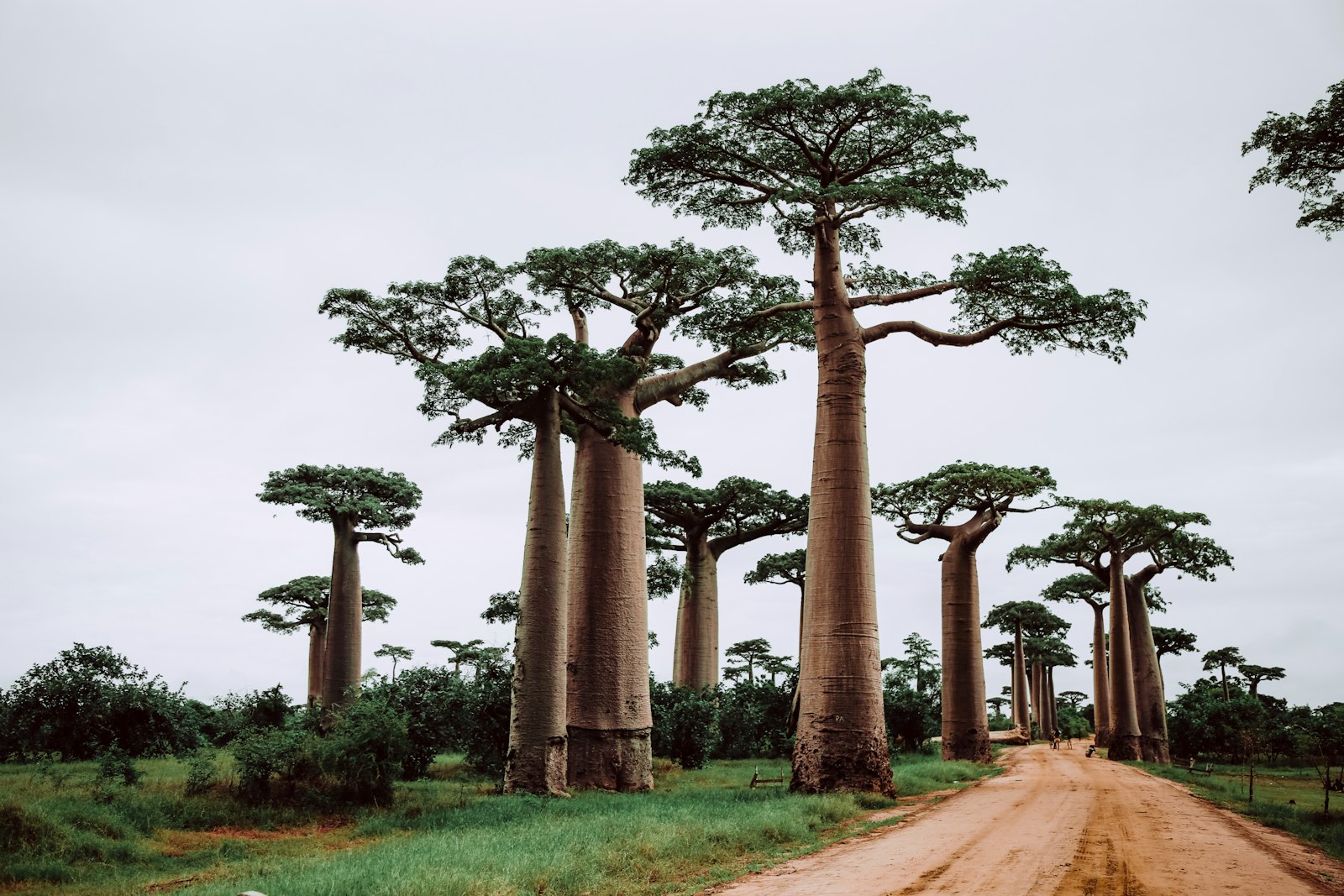
The Avenue of the Baobabs (Allée des Baobabs) is arguably Madagascar's and all Africa's most iconic image: two rows of 30-meter-tall, 800-year-old Grandidier's baobabs flanking a red dirt road.
Sunset here is sublime. We arrived two hours early to watch the light change: golden, orange, red, black silhouettes against a blazing sky. Local Malagasy sell baobab wood carvings and children play among the enormous trunks.
Near Morondava, the Sacred Baobab is a solitary 1,400-year-old specimen with offerings from locals at its base. The Tsingy de Bemaraha (World Heritage Site, 200 km away) is the main attraction: a limestone formation of razor-sharp stone needles up to 90 meters tall, with suspension bridges, metal ladders and caves creating an otherworldly landscape.
Access to the Tsingy requires an 8-10 hour journey on dirt tracks (only accessible in dry season, May-November). It's exhausting but absolutely essential: there's nothing like it anywhere else in the world.
Ranomafana and the eastern rainforest
Madagascar's east coast is dense, humid tropical rainforest, home to most lemur species. Ranomafana National Park (41,600 hectares) is one of the best for sightings: the golden bamboo lemur (discovered in 1986, fewer than 500 individuals), the mouse lemur (the world's smallest primate, 30 grams) and Milne-Edwards' sifaka.
Night treks are magical: with headlamps we searched for chameleons (Madagascar has 50% of the world's species), neon-colored jewel frogs, tenrecs (Malagasy hedgehogs) and the aye-aye, the world's strangest primate with its elongated middle finger for extracting larvae from wood.
Antsirabe (on the road from Tana) is the "city of water" with hand-pulled rickshaws (pousse-pousse), artisanal zebu horn workshops and a spa culture inherited from French colonizers.
The Canal des Pangalanes, a 600 km waterway along the east coast, offers an aquatic alternative: pirogue journeys between fishing villages, rainforest and lagoons where crocodiles sunbathe on the banks.
Nosy Be and northern beaches
Nosy Be is Madagascar's tourist island: white sand beaches, turquoise waters, coral reefs and lush tropical vegetation. But beyond the resorts, Nosy Be has its own personality.
Snorkeling and diving at Nosy Tanikely (marine reserve) reveals an underwater world comparable to the Red Sea: corals, sea turtles, rays, reef sharks and schools of impossibly colorful tropical fish. From July to September, humpback whales migrate through these waters and can be observed from boats.
Nosy Komba (neighboring island) is the "lemur island": black macaco lemurs live freely and approach visitors without fear. Wood carving workshops and hand-embroidered tablecloths make the best souvenirs.
Nosy Iranja is the secret jewel: two islets connected by a white sand tongue that appears and disappears with the tides. Green turtles nest on its beaches between November and February. It's arguably the most beautiful beach in the entire Indian Ocean.
Nosy Be cuisine is maritime and spicy: grilled lobster (from €8), coconut shrimp, tuna with ylang-ylang sauce (the island is the world's largest producer of this essence) and local Dzama rum with vanilla and honey.
Practical tips and budget
Madagascar requires serious planning: infrastructure is limited, roads are in poor condition and distances are enormous. Hiring a local driver-guide (€40-60/day with car) is almost mandatory and the trip's best decision.
The visa is obtained on arrival (€35 for 30 days, €40 for 60 days). Flights from Europe via Paris, Istanbul or Nairobi (€400-800 round trip). Air Madagascar operates domestic flights but is unpredictable: always reconfirm 72h before.
Dry season (May-October) is the best time. Rainy season (November-April) makes many roads impassable. Tropical cyclones affect the east coast between January and March.
Budget for 14 days (2 people): Driver-guide with car: €700-1,000. Accommodation (lodges and guesthouses): €500-900. National parks and guides: €200-350. Meals: €250-400. International flight: €400-800/person. Domestic flights (if needed): €200-400. Total: €2,250-3,850 for two people.
Recommended vaccines: yellow fever (if coming from endemic zone), hepatitis A/B, typhoid. Antimalarial prophylaxis mandatory (Madagascar has malaria in coastal areas). Bring 50% DEET repellent and sleep under mosquito nets.
Ready to live your own adventure? Create your free Odysseus account and plan your next trip.
Create a free account on the web