Hawaii: Volcanoes, Dream Beaches and the Aloha Spirit in 10 Days
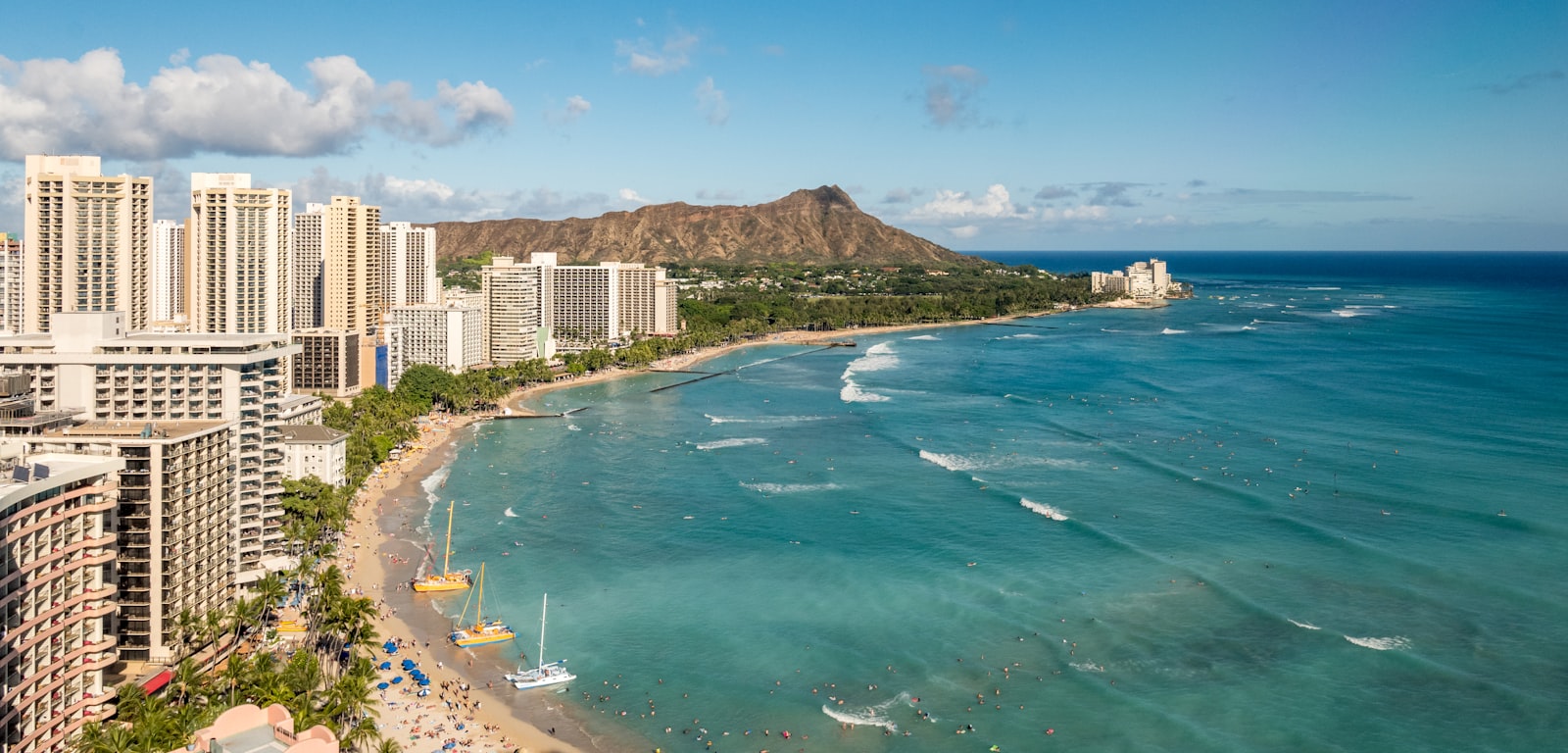
Hawaii is much more than a beach postcard: it's an archipelago of active volcanoes, impenetrable tropical jungles, millennia-old Polynesian traditions and a spiritual energy Hawaiians call mana. From Oahu to Maui, from Kilauea's lava to Big Island's black sand beaches, here's how we lived 10 days across two islands of this Pacific paradise. 🌺
Oahu: Waikiki, North Shore and Pearl Harbor
Waikiki Beach is Hawaii's tourist epicenter: 3 km of sand with Diamond Head in the background, the archipelago's most iconic volcanic silhouette. Climbing Diamond Head (12 USD, 1.5 hours round trip) at sunrise is the best way to start the trip: 360° views of Honolulu and the Pacific.
Oahu's North Shore is the world surf mecca: Pipeline, Sunset Beach and Waimea Bay have waves up to 15 meters in winter (November-February). In summer the waters are calm, perfect for snorkeling at Shark's Cove and Turtle Bay (where swimming with green sea turtles is almost guaranteed).
Pearl Harbor (free entry to the USS Arizona Memorial, book online weeks in advance) is a deeply moving experience. The museum, audio guides and the boat to the memorial above the sunken ship where 1,177 sailors rest are unmissable.
Kailua Beach, on the windward coast, is locals' favorite beach: talcum-white sand, crystal-clear turquoise waters and kayaking to the Mokulua Islands (rental from 30 USD).
Maui: the Road to Hana and Haleakalā
The Road to Hana is one of the world's most spectacular drives: 103 km, 620 curves, 59 bridges (many single-lane) and waterfalls at every kilometer. It's not a destination, it's the journey itself. Must-stop: Twin Falls (easy, 20 min), Wai'anapanapa State Park (black volcanic sand beach), Wailua waterfall and the bamboo forests.
Haleakalā (3,055 meters) is Maui's dormant volcano. Watching sunrise from the summit (mandatory reservation at recreation.gov, 1 USD) is a mystical experience: you're literally above the clouds watching the sun emerge from the Pacific. Temperature can be 0°C at the top while it's 28°C below. Bring layers.
Ka'anapali Beach is Maui's best resort area: excellent snorkeling at Black Rock, daily sunset cliff diving ceremony and the 5 km coastal walk to Kapalua. Molokini Crater (boat trip, 150-200 USD) is a semi-submerged volcanic crater with 50-meter visibility: Hawaii's best snorkeling.
Lahaina was the ancient Hawaiian kingdom's capital: historic streets, art galleries, farm-to-table restaurants and the famous 1873 banyan tree that covers an entire block.
Big Island: Kilauea and black sand beaches
Hawai'i Volcanoes National Park (30 USD/vehicle, valid 7 days) is where the Earth is literally being created before your eyes. Kilauea is one of the world's most active volcanoes. Crater Rim Drive borders the Halema'uma'u caldera (visible smoke column by day, red glow by night). Chain of Craters Road descends to the coast where historic lava has created lunar landscapes.
Punalu'u Black Sand Beach has volcanic black sand and is the most reliable place to see sea turtles resting on the beach. They're protected: maintain 3 meters distance.
Kona, on the west coast, is Big Island's tourist zone: Kona coffee (plantations offer free tours and tastings), night snorkeling with manta rays (one of the world's most incredible experiences, 100-150 USD, mantas can measure 5 meters) and epic sunsets.
Waipi'o Valley, the Valley of the Hawaiian Kings, is a natural 600-meter-deep amphitheater with 300-meter waterfalls, cultivated taro and wild black sand beaches. Access by 4x4 (the road has a 25% grade) or on foot (1 hour descent).
Hawaiian culture and food
Hawaiian culture is much more than tourist luaus. The concept of aloha goes beyond a greeting: it means love, compassion and mutual respect. The spirit of ohana (extended family) and respect for the aina (land) are the pillars of a culture that survived colonization.
An authentic luau (Old Lahaina Luau in Maui, 130 USD, book weeks in advance) includes kalua pig cooked underground for 8 hours, poi (taro paste), fresh poke and hula dances that tell ancestral stories.
Hawaiian cuisine fuses Polynesian, Japanese, Filipino and American influences. The poke bowl (raw tuna cubes with soy sauce, sesame oil and onion) was born here. Plate lunches (rice, macaroni salad and protein) are the quintessential local street food (8-12 USD).
Shave ice (shaved ice with tropical syrups, different from slushies) is the Hawaiian dessert: Matsumoto's on North Shore Oahu has 30-minute queues that are worth it. The malasada (Portuguese donut without a hole, cream-filled) from Leonard's Bakery is addictive.
Practical tips and budget
Getting between islands: Hawaiian Airlines and Southwest connect the main islands (50-150 USD per leg, 30-45 min). Book in advance. Within each island, a rental car is essential (50-100 USD/day depending on season). Maui and Big Island have no practical public transport.
Accommodation: Waikiki (Oahu) has the most options and price range (100-400 USD/night). In Maui, Ka'anapali and Kihei are the main zones. Condos with kitchens are a smart option to save on meals.
Budget for 10 days/2 islands (per person): International flight: €600-1,200 (from Europe, with layover). Inter-island flights: 100-200 USD. Accommodation: 1,000-2,500 USD. Car rental: 500-1,000 USD. Food: 400-800 USD. Activities: 300-600 USD (snorkel, luau, parks). Total: 2,300-5,100 USD (~€2,100-4,700).
Best time: April-June and September-November (shoulder season). December-March is peak season with maximum prices but the best waves on North Shore. Humpback whale season (December-April) allows sightings from shore, especially in Maui.
Plan this trip
Itineraries, budgets and real traveler routes for this destination.
More stories from United States
Ready to live your own adventure? Create your free Odysseus account and plan your next trip.
Create a free account on the web