Cambodia: Angkor Wat, Lost Temples and the Soul of the Mekong in 10 Days
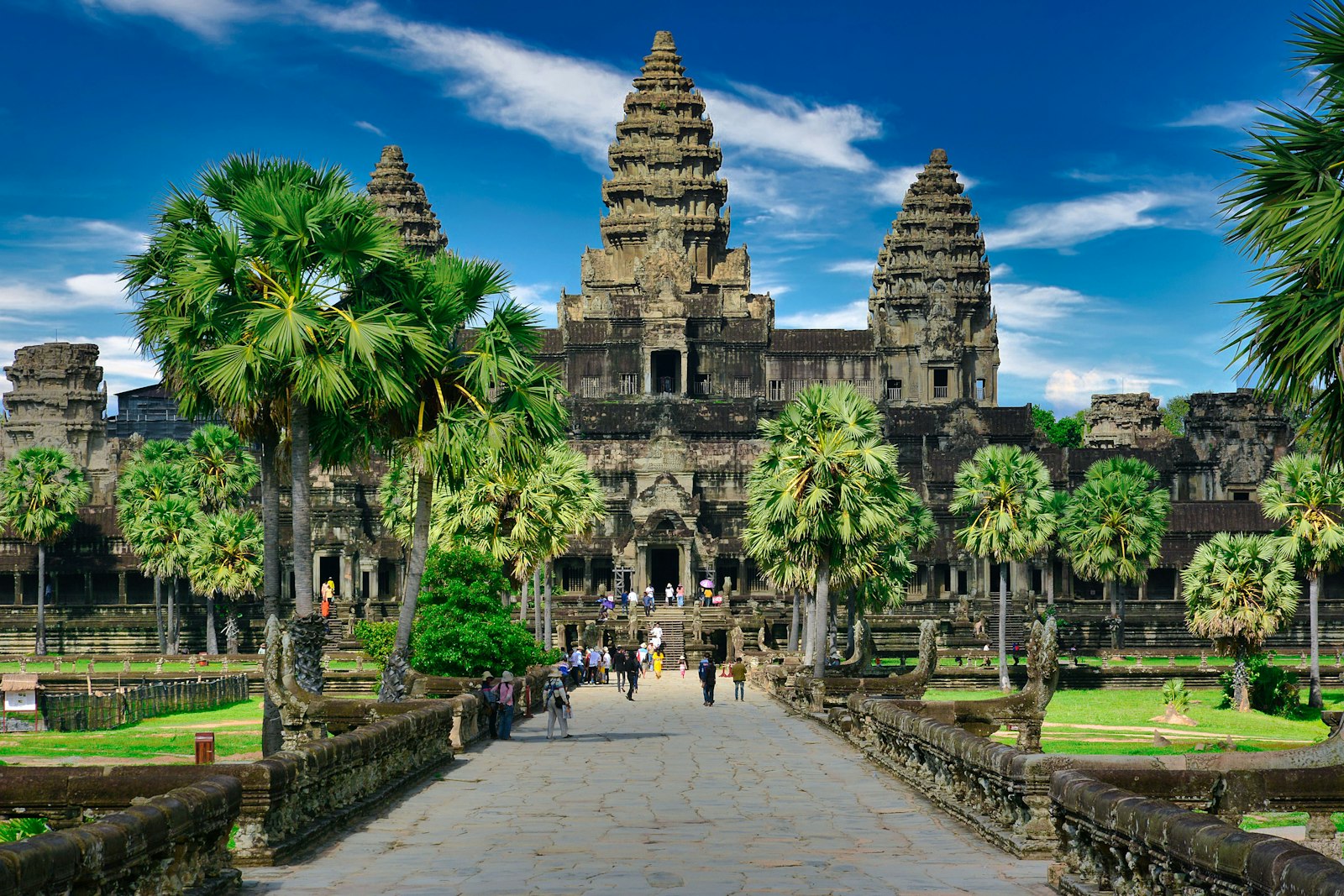
Cambodia is one of those destinations that changes you from within. Angkor Wat at sunrise, temples devoured by jungle, the charming chaos of Phnom Penh and the pristine beaches of the south. A country with a brutal history and a disarming smile. 🏛️ Here's how we spent 10 days in the Khmer kingdom.
Siem Reap and the Angkor complex
Angkor is the world's largest religious complex: over 1,000 temples spread across 400 km². The Khmer Empire (9th-15th centuries) built a civilization that rivaled the great powers of its era, with a hydraulic system feeding a million people.
Angkor Wat is the crown jewel: the largest Hindu temple ever built, converted to Buddhism in the 12th century. Arriving before sunrise (4:30 AM) to watch the sun emerge behind the five towers is a mandatory ritual. The reflection in the front lotus pond creates the iconic image we all know.
But Angkor goes far beyond Angkor Wat. Angkor Thom, the last Khmer capital, features the Bayon with its 216 smiling stone faces watching you from every angle. Ta Prohm, the Tomb Raider temple, where strangler fig roots literally devour the stones, is the most powerful image of nature versus civilization.
We recommend the 3-day pass ($62 USD) to explore unhurriedly the small circuit, the grand circuit and remote temples like Banteay Srei (the jewel of Khmer art with microscopic reliefs in pink sandstone) and Beng Mealea (a temple completely swallowed by jungle, unrestored).
Phnom Penh: History, resilience and gastronomy
Phnom Penh is chaotic, dusty and absolutely fascinating. Cambodia's capital buzzes with motorbikes, tuk-tuks, markets and infectious energy. The Royal Palace and Silver Pagoda are an elegant introduction, but the city's soul lives in its markets.
Central Market (Psar Thmei), a 1937 Art Deco building, is a labyrinth of jewelry, fabrics, electronics and street food. Russian Market (Psar Tuol Tom Poung) is better for souvenirs and vintage clothing.
Visiting the Killing Fields (Choeung Ek) and Tuol Sleng Genocide Museum (S-21) is essential and devastating. The Khmer Rouge regime (1975-1979) exterminated nearly 2 million Cambodians (25% of the population). Understanding this history is essential to comprehend modern Cambodia and its people's incredible resilience.
Cambodian cuisine surprises: amok (gentle steamed fish curry in banana leaf), lok lak (stir-fried beef with Kampot pepper), nom banh chok (rice noodles with green fish curry) and kampot pepper crab. Kampot pepper has its own appellation and is considered the world's finest by many chefs.
Battambang and the Bamboo Train
Battambang is Cambodia's second city and its most charming. French colonial architecture crumbling with elegance, rural temples, endless rice paddies and the famous Bamboo Train (Norry): a bamboo platform on a chassis with a lawnmower engine running along abandoned tracks at 40 km/h.
The surroundings offer Phnom Sampeau (mountain with panoramic views, temples and caves used as prisons by the Khmer Rouge), the temples of Ek Phnom and Wat Banan (the "mini Angkor Wat") and traditional artisan villages.
The sunset with millions of bats emerging from Phnom Sampeau caves is a unique natural spectacle: a winding black column lasting over 30 minutes while the sun sets over the rice fields.
Battambang is also Cambodia's rural culinary capital. Local restaurants serve dishes you won't find in Phnom Penh or Siem Reap: homemade kroeung (fresh curry paste), samlor korko (vegetable soup with prahok, fermented fish paste) and traditional palm sugar sweets.
Southern coast: Koh Rong and Kampot
After so many temples and history, Cambodia's southern coast offers the perfect counterpoint. Koh Rong Samloem is an island with crystalline white sand beaches and turquoise waters where mass tourism hasn't yet arrived. Lazy Beach, accessible only by boat, is one of Southeast Asia's most beautiful.
The bioluminescent plankton at Koh Rong is magical: swimming at night, every movement generates blue-green sparks of light in the water. It's a science-fiction-like experience that only occurs on a handful of beaches worldwide.
Kampot is a French colonial town on the riverbank, famous for its pepper (the world's best according to many chefs) and visitable plantations. The sunset river cruise along the Praek Tuek Chhu River is unmissable, with cold beer and Bokor Mountain's silhouette in the background.
Kep, 25 km from Kampot, has Cambodia's best pepper crab at its crab market. Kep National Park offers trekking with views over the Gulf of Thailand and ruins of French colonial villas devoured by jungle.
Practical tips and budget
Cambodia uses the US dollar as a parallel currency to the riel. Everything is paid in USD (change is given in riels). ATMs dispense USD. Carrying small bills ($1, $5, $10) is essential.
The visa is obtained on arrival at the airport ($36 USD, e-visa available online for $30 + $6 processing fee). Passport with 6 months validity and one passport photo required.
Budget for 10 days (2 people): Accommodation (guesthouses and boutique): €300-600. Angkor passes (3 days): €124. Internal transport (buses, tuk-tuks, ferries): €150-250. Meals: €200-350. International flight: €400-600/person. Activities and tours: €100-200. Total: €1,300-2,200 for two people.
Best time: November-February (dry season, bearable temperatures 25-32°C). March-May is extreme hot season (38-42°C). June-October is rainy season (but Angkor in rain has special charm and fewer tourists). Clothing must cover shoulders and knees for temple visits.
Ready to live your own adventure? Create your free Odysseus account and plan your next trip.
Create a free account on the web