Hong Kong: Skyscrapers, Dim Sum and Cantonese Tradition in 5 Days
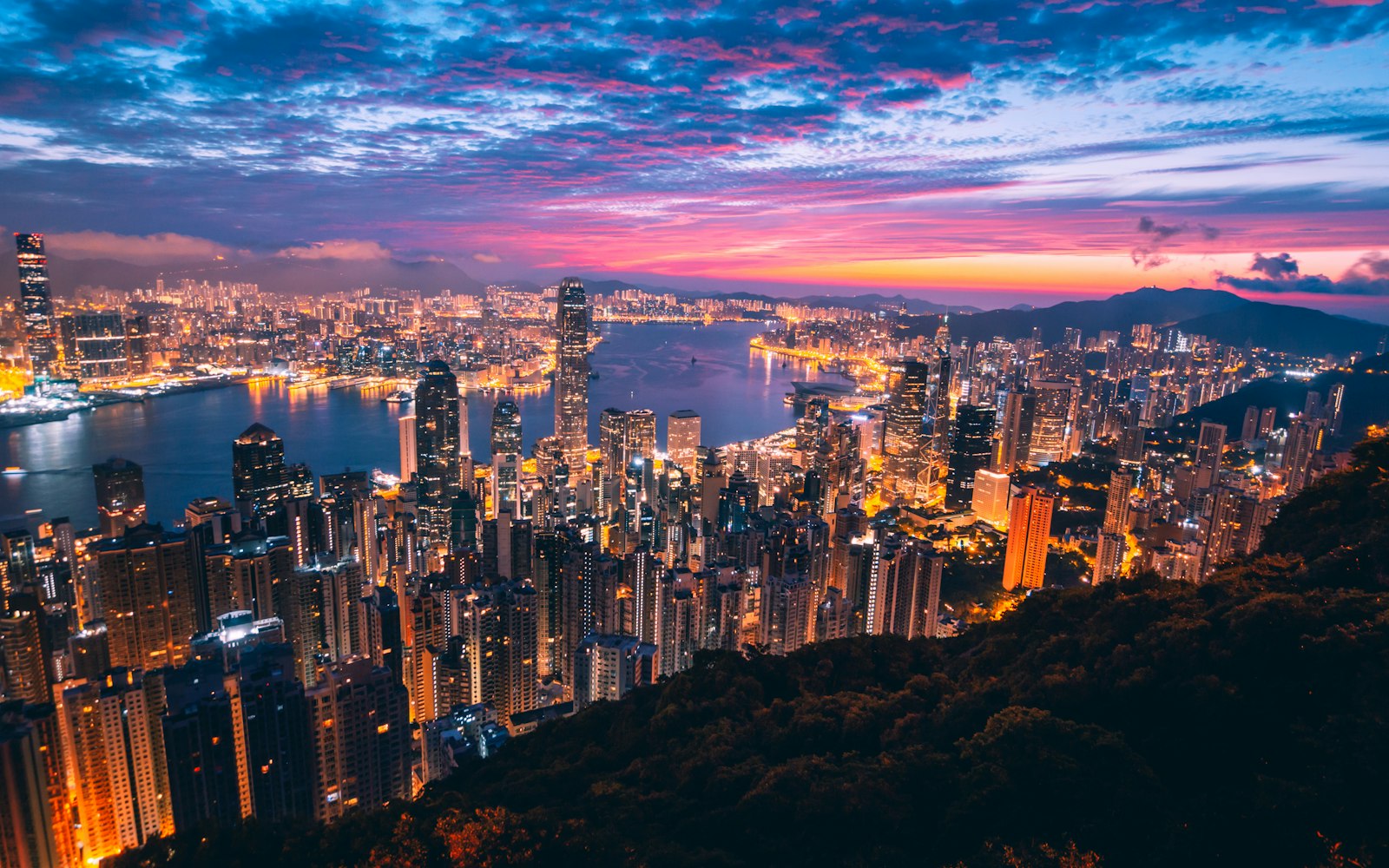
Hong Kong is a city of impossible contrasts: 400-meter skyscrapers next to century-old temples, dim sum street markets two blocks from luxury boutiques, tropical islands 30 minutes by ferry from the planet's densest financial district. It's east and west fused into a metropolis that never sleeps. 🌃 Here's how we lived 5 days of total intensity.
Victoria Peak and the world's most spectacular skyline
Victoria Peak (552 meters) offers Hong Kong's most iconic view: the glass-and-steel skyscraper skyline of Central and Hong Kong Island reflected in Victoria Harbour, with Kowloon and the New Territories mountains behind. Going up on the Peak Tram (funicular since 1888, 52 HKD round trip) is part of the experience: the incline reaches 27°.
The Sky Terrace 428 (Hong Kong's highest observation deck, 128 HKD) has 360° views. Free alternative: the circular path of Lugard Road and Harlech Road (3.5 km, 1 hour), a flat trail at the summit with views without glass or crowds. Go at sunset to watch the city light up.
The Symphony of Lights (light and music show over the skyline, 8PM nightly, free) is best seen from the Avenue of Stars in Tsim Sha Tsui, across the harbor. Combine with a nighttime stroll along the Kowloon waterfront for the best first night in Hong Kong.
The Star Ferry (between Central and Tsim Sha Tsui, 4 HKD, 8 minutes) is the world's most romantic and cheapest transport: a double-decker ferry since 1888 crossing Asia's most photogenic harbor.
Dim sum, street food and Cantonese cuisine
Hong Kong is the world capital of dim sum. Tim Ho Wan (the first dim sum Michelin star, dishes from 25 HKD) has 1-hour queues but it's worth it. Lin Heung Tea House (since 1926) is the most authentic experience: carts rolling between tables where you need to be quick to choose. Must-haves: har gow (shrimp dumpling), siu mai (pork and shrimp), char siu bao (BBQ pork bun) and cheung fun (steamed rice rolls).
The dai pai dong (outdoor street food stalls) at Temple Street Night Market and Mong Kok night market offer wonton noodles, curry fishballs (the most iconic street snack, 15 HKD), egg waffles (bubble-shaped waffles, 20 HKD) and tofu pudding.
For elevated dining, The Chairman (one Michelin star, contemporary Cantonese with local ingredients, menu from 800 HKD) and Lung King Heen (world's first Chinese restaurant with three Michelin stars) are exceptional.
The cha chaan teng (Hong Kong-style café) is a local institution: scrambled eggs on toast with condensed milk, HK milk tea (tea with evaporated milk, intense and creamy) and macaroni with ham in soup. Australian Dairy Company and Kam Wah Café are the classics.
Kowloon: markets, temples and street life
Kowloon is Hong Kong's most authentic and chaotic side. Wong Tai Sin Temple (entry by donation) is the most visited: thousands of worshippers burn incense and consult fortune tellers daily. The golden-roofed architecture against the skyscraper backdrop encapsulates Hong Kong in one image.
Ladies' Market in Mong Kok (1 km of stalls, from mid-afternoon) has clothing, souvenirs and electronics. Flower Market Road and the Bird Garden (both free) offer a quieter, more local Hong Kong. Sneaker Street (Fa Yuen Street) is sneaker paradise with specialist shops impossible to find in Europe.
Sham Shui Po is the most authentic and least touristy neighborhood: fabric shops, local food markets, hidden temples and Hong Kong's best street food. It's where locals go when they want to eat well and cheap.
The Hong Kong Museum of History (free) offers a fascinating look at how a fishing village became a global metropolis. The Cultural Centre in Tsim Sha Tsui hosts world-class exhibitions.
Islands and nature: Lantau, Lamma and hiking
Lantau Island has the Tian Tan Big Buddha (34 meters, bronze, free), accessible via the Ngong Ping 360 cable car (235 HKD round trip, 25 minutes with sea and mountain views). Po Lin Monastery offers vegetarian meals (98 HKD). Tai O village ("Hong Kong's Venice") has stilt houses, dried fish markets and pink dolphins.
Lamma Island (30 min by ferry from Central, 20 HKD) is the antidote to urban chaos: car-free, seafood restaurants by the sea, quiet beaches and a 7 km coastal walk between Yung Shue Wan and Sok Kwu Wan villages. Lunch at Rainbow Seafood (customers choose live fish) is a ritual.
Hong Kong has 300 km of marked trails. Dragon's Back (8.5 km, 3 hours) was named Asia's best urban walk: views of beaches, mountains and the city. MacLehose Trail Stage 2 (13.5 km) passes some of the prettiest beaches.
Cheung Chau Island is perfect for a day trip: beach, temples, ice cream shops and the famous Bun Festival (May). Car-free, with a fishing village atmosphere.
Practical tips and budget
Getting around Hong Kong: the Octopus card (50 HKD refundable deposit) works on the MTR metro, buses, ferries, trams and shops. The MTR is impeccable: clean, punctual, air-conditioned with English signage. The double-decker tram on Hong Kong Island (ding ding, 3 HKD) doubles as transport and tourist attraction.
Accommodation: Hong Kong is expensive. Tsim Sha Tsui (Kowloon) has the best value (400-1,000 HKD/night). Central and Wan Chai are pricier. Hostels from 150 HKD/night. Sheung Wan boutique hotels combine design and location at reasonable prices.
Budget for 5 days (per person): Flight: €400-800 (from Europe). Accommodation: 2,000-5,000 HKD. Transport: 200-400 HKD (Octopus). Food: 1,000-2,500 HKD (dai pai dong + dim sum + restaurants). Activities: 500-1,000 HKD (Peak, Ngong Ping, ferries). Total: 3,700-8,900 HKD (~€430-1,030, excluding flight).
Best time: October-December (autumn, 20-25°C, clear skies, low humidity). January-March is cool but pleasant. Avoid June-August: extreme heat (33°C+), 90% humidity and typhoon season.
Ready to live your own adventure? Create your free Odysseus account and plan your next trip.
Create a free account on the web